
A Paradigm Shift for Northern Norway
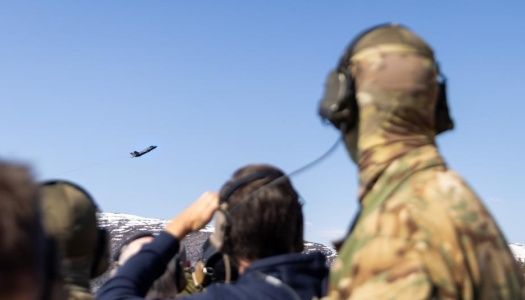
A cold wind is blowing from the east. It brings with it a military buildup in the North. Northern Norway is at the forefront as Norway and NATO seek to deter Russia. Paradoxically, this also presents significant opportunities for value creation and growth in the region.
The mobilisation now underway represents a paradigm shift. Changes like this can be hard to spot when they happen gradually, but the capacity being built up in the north is historically significant. Our visions for the “new” Northern Norway must reflect that. It’s time to think big in areas such as infrastructure, energy, food systems, civil–military cooperation and Nordic cooperation.
But first, the most important thing: people. No people, no security. No security, no people. A declining population is terrible news for resilient communities. Demographic challenges in the north have long been a national headache, and various governments have tried different prescriptions: lower tax rates, forgiveness of student debt, free childcare, exemptions on electricity taxes and employer contributions in designated zones. Yet life in the North remains expensive and difficult, and out-migration continues except in a few larger towns.
An influx of military personnel could have many positive spill-over effects. The age profile of those in uniform is favourable, families often follow, and the armed forces have varied needs from civilian suppliers — from toilet paper to ammunition. Combined with the region’s need to strengthen food self-sufficiency, this could enhance the economic foundation along the coast. Attractive cities with growth can and should support development in rural areas. But financial incentives will likely be needed as well. Strategic use of the up to 1.5 % of GDP allocated to civilian defence- and security-related investments could play a decisive role. Population growth is self-reinforcing: when more people choose to stay in or move to the region, it becomes more attractive for others to do the same. This is the single most important Gordian knot to cut. Without people, even the most ambitious investments will fail.
With “paradigm glasses” on, current debates about dilapidated roads, outdated tunnels, extending the Nord-Norway railway with double tracks from Ofotbanen and further north, vulnerable air services, a weak north–south and east–west power grid, a ferry-free E6 and strategic ports don’t seem out of place. But the question shouldn’t be whether these systems should be upgraded — it should be how and how fast. Billions of kroner in potential value are literally running out to sea because the power grid lacks sufficient capacity. The infrastructure gap in Northern Norway is large and must be closed. This is not a cry from “whining northerners,” but a national security issue and a natural part of total preparedness.
One example of the need to rethink vital societal functions is food self-sufficiency. Take Troms region for example: here the numbers speak for themselves. The self-sufficiency rate is below 10 %, with over 90 % of food production being seafood — almost all of which is exported. Self-sufficiency is somewhat better in Nordland, but extremely challenging in Finnmark.
Northern Norway’s climate limits agricultural production, but the sea teems with living marine resources. Today we see reduced cod quotas in the Barents Sea — a complex and worrying development. It is crucial that sustainable fish stocks are maintained. Aquaculture still depends on imported feed ingredients, and is therefore not as self-sufficient as wild fisheries.
We do have enough food in the North, but our systems are not set up to bring the cod to northern Norwegian dinner tables. Many actors in both the public and private sectors must work together to build food systems for a new era. This could also open opportunities for deeper cooperation across Norway’s three northernmost counties. Administrative borders should not hinder the integration of critical societal functions when national security is at stake.
Prime Minister Jonas Gahr Støre likes maps — with good reason — the perpective changes when the World is seen from the North. The northern parts of Finland, Sweden and Norway — the European Arctic — form a large region where NATO now meets Russia. When existing transport infrastructures are mapped, the weaknesses of east–west axes become clear.
To become stronger, energy exchange across borders should harness combined resources more effectively. The two northernmost universities in these three countries have established a cooperation — The Arctic Six — which can help strengthen knowledge production from the North. We benefit from being ahead in areas such as climate, societal and economic development, and civil–military cooperation.
Today, the lack of connective tissue across the European Arctic is a vulnerability, but also an exciting opportunity to build partnerships with neighbors and like-minded actors in a world where good friends are in short supply.

This op-ed can be read in the following publications (in Norwegian):