INTERNATIONAL OCEAN POLICY AND THE ARCTIC
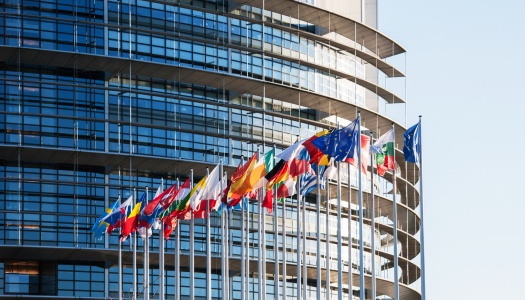
What happens in the UN, the EU, and global arenas for ocean governance has direct consequences for everyday life in the North. New regulations, geopolitical rivalry, and changes in the legal framework of the law of the sea affect harvesting, value creation, and Norway’s room for manoeuvre as an ocean nation. In the Arctic, this is felt particularly strongly—where great power politics, climate change, and vulnerable ecosystems intersect.
For the Centre for the Ocean and the Arctic, this thematic area is about building bridges: how can international decisions be understood and applied in a Norwegian and Arctic context—and how can Northern Norwegian and Arctic perspectives gain a clearer voice where ocean policy is shaped?
Through analyses, projects, and meeting arenas, we explore:
- how global ocean policy affects Norwegian ocean industries and framework conditions in the North
- how the Arctic is being shaped by new geopolitical constellations, and what this means for cooperation and governance
- how international conservation targets, such as 30x30, are balanced against fisheries rights and commercial interests
- how EU regulations and processes, such as marine spatial planning and the Ocean Pact, affect Norway
- how Norway’s position is influenced by issues such as seabed minerals and international negotiations
- what Norway can learn from other Arctic states facing similar challenges
International ocean policy is not only about rules and agreements.
It is about ensuring predictability for coastal communities, fair competitive conditions for industry, and sustainable management of the marine areas on which we depend. By closely following developments—and participating where policy is shaped—HAV helps make complex global processes understandable for Norwegian decision-makers, industry actors, and the public.
Current roles and appointments
Intergovernmental Panel on Climate Change (IPCC)
Jan-Gunnar Winther was one of the lead authors of Climate Change 2013: The Physical Science Basis. His participation provides the Centre for the Ocean and the Arctic with a strong scientific foundation when linking climate change to ocean and Arctic issues. (Jan-Gunnar Winther)
World Economic Forum – Friends of Ocean Action
A global network driving solutions to ocean challenges. Through this work, the Centre for the Ocean and the Arctic gains early insight into trends and priorities shaping international ocean policy. (Jan-Gunnar Winther)
China Council for Cooperation on Environment and Development
An advisory body to the Chinese authorities on climate and environmental issues. Winther’s participation gives the Centre for the Ocean and the Arctic access to unique perspectives on how major powers approach ocean policy. (Jan-Gunnar Winther)
Expert Group for the High Level Panel for a Sustainable Ocean Economy
The expert group advises heads of government on the development of policies for a sustainable ocean economy. The Centre for the Ocean and the Arctic helps ensure that experiences from Norway and the Arctic are brought into this work. The Centre led the Panel’s report on integrated ocean management. (Jan-Gunnar Winther)
Horizon Europe – Mission Board “Restore our Ocean and Waters”
The EU’s flagship initiative for ocean and water action towards 2030, with a particular focus on the Atlantic–Arctic region. Participation gives the Centre for the Ocean and the Arctic a voice in shaping European ocean policy. (Jan-Gunnar Winther)
United Arab Emirates Polar Program Board
A platform that promotes polar research and cooperation with new actors. Through this work, the Centre for the Ocean and the Arctic gains access to partnerships and perspectives from countries investing in polar policy. (Jan-Gunnar Winther)
Relatert innhold
Through the societal mission Restore Our Ocean and Waters, the EU brings together research, business and management to protect and restore oceans and freshwater – one of five major societal missions under Horizon Europe.
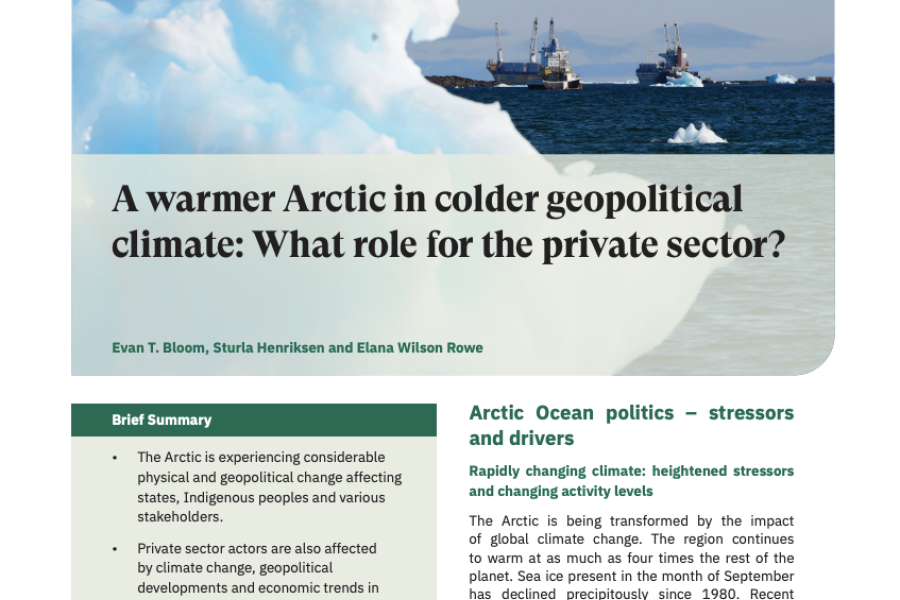
Arktis står overfor raske fysiske og geopolitiske endringer. Notatet diskuterer hvordan næringslivet kan bidra til stabilitet og bærekraftig forvaltning i en mer kompleks region.
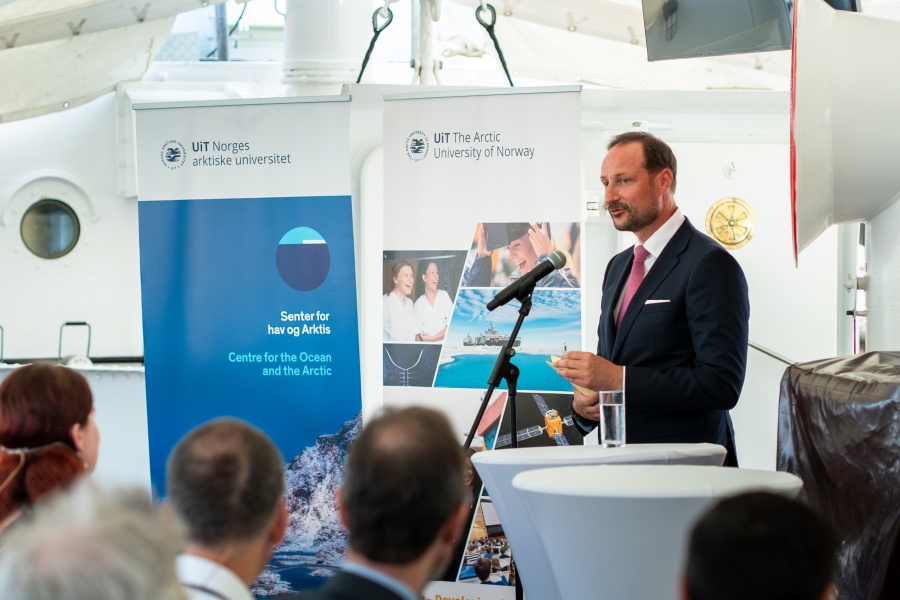
The Centre for the Ocean and the Arctic held project management responsibility for UiT’s side event Arctic Future Pathfinders at the UN Ocean Conference in Nice in June 2025.