
EU Mission: Restore our Ocean and Waters
What are the EU's targeted societal Missions?
EU Missions are large-scale initiatives under Horizon Europe setting clear, time-bound goals that drive focused efforts towards some of our greatest challenges such as climate change, cancer, ocean restoration, soil health, and the development of climate-neutral and smart cities. By bringing together researchers, policymakers, citizens, and stakeholders, EU Missions pool the necessary resources to drive innovation and deliver concrete solutions for societal benefit.
The mission Restore Our Ocean and Waters aims to contribute to protecting, restoring, and sustainably using oceans and waters. Norway actively participates through research communities, industry, and authorities.
One of the five Missions is Restore Our Ocean and Waters, which focuses on protecting and restoring life in oceans and freshwater. The mission's goals are to:
- Protect and restore ecosystems
- Prevent pollution
- Promote sustainability, carbon neutrality, and a circular economy
Four geographic focus areas, known as "lighthouses," have been designated to lead the work in different regions:
- The Mediterranean
- The Baltic Sea and North Sea
- The Atlantic and Arctic
- The Danube and Black Sea
The mission is led by a Mission Board consisting of 15 experts from across Europe, who provide strategic advice to the European Commission on how to achieve the goals. The Director of the Center for the Ocean and the Arctic, Jan-Gunnar Winther, is a member of this board and contributes to bringing Norwegian perspectives and expertise into the European effort for sustainable oceans and water resources.
Norwegian actors leading the way
Norwegian research communities are performing exceptionally well in the Restore Our Ocean and Waters mission, with a success rate of 6%. The Research Council of Norway facilitates Norwegian participation in EU-funded projects and helps Norwegian research and innovation communities succeed in European collaboration.
Moving forward, the EU will increasingly prioritize implementation, innovation, and scaling up. It is assumed that much of the necessary knowledge already exists – the focus now is on applying it. This presents significant opportunities for more collaboration between academia, industry, and local and regional authorities, who are often the end-users of the research.
Competence and cross-sector collaboration are highlighted as key success factors. Several projects demonstrate how municipalities, research communities, and local communities can work together to find practical solutions, for example, by combining research data with local knowledge from fishers and coastal industries.
The ocean as a key to sustainability
In the Mission Board for the societal mission on healthy oceans and waters, the role of the ocean in security and preparedness is increasingly discussed. Topics such as food, energy, transport, data, environmental, and climate security are expected to shape the research and innovation portfolio in the future.
Norway, with its vast ocean areas in the north and extensive expertise in ocean research and management, is in a particularly strong position to contribute to these emerging societal needs.
Norway also supports international goals to conserve a significant portion of the world's ocean and land areas. Research shows that conservation efforts not only protect biodiversity but can also strengthen resource bases and create more resilient ecosystems.
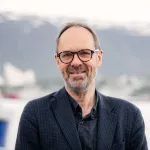
Jan-Gunnar Winther is the Director of the Centre for the Ocean and the Arctic and a member of the EU’s Mission Board for Restore Our Ocean and Waters.
In this role, he helps bring Norwegian perspectives and expertise into the European initiative focused on sustainable oceans and water resources.