
Changing Risk Landscape in the North: Marine Industries Call for Closer Cooperation
At High North Dialogue 2025, the Centre for the Ocean and the Arctic brought together key stakeholders from shipping, fisheries, emergency preparedness, the public sector and research for a roundtable discussion on how the evolving security situation in the High North is affecting Norwegian marine industries. The conversation was held under Chatham House rules and highlighted both vulnerabilities and opportunities for strengthened cooperation.
Increased Activity – Increased Risk
A clear picture is emerging in the North: more activity across sectors, more actors at sea, and a rapidly changing risk landscape. Participants at the roundtable broadly agreed that hybrid threats, jamming, disinformation and pressure on infrastructure are challenging current levels of preparedness.
Everyone operating at sea feels the heightened risk. That makes real-time situational awareness and better coordination absolutely crucial, was one of the key points raised.
At the same time, Norway’s position in the North was highlighted as unique – a wealthy, open country with a border to Russia and significant strategic importance. This brings both opportunities and vulnerabilities, especially in terms of digital security and critical infrastructure.
Total Defense as a Framework
The concept of total defense - the integrated use of civilian and military resources in times of crisis - was highlighted as a key framework for strengthening cooperation between civilian and military actors. Several participants stressed the need for clearer guidelines, better information sharing and more cross-sector exercises.
Preparedness is strongest when it is integrated into the daily operations of industries. That requires prevention, self-preparedness and good mechanisms for early warning and repair, participants noted.
Many industries already have solid systems for reporting and collaboration with authorities, but many still point to fragmented responsibilities and uneven links to emergency response structures.
The Role of Municipalities and Capacity Challenges
Representatives from the public sector expressed concern that the number of incidents has increased significantly over recent decades without a corresponding increase in resources. Many municipalities lack dedicated resources for safety and emergency preparedness, even though ports are municipally owned and play a key role.
One question stood out as a clear challenge: Are we prepared to operate for one week without electricity?
The Way Forward: From Sector Silos to Holistic Approaches
The discussion underlined a strong willingness to cooperate, but also a need for new frameworks and meeting places. The roundtable identified five priority areas:
- Better real-time situational awareness across sectors
- Strengthened local, regional and national preparedness for marine industries
- More cross-sector dialogue and encouraging early reporting and notification
- Integration of cyber and ICT security into physical preparedness
- Clear roles and responsibilities for industries’ contributions to total defence
We are in a new risk landscape in the North. If marine industries are to contribute to total preparedness, they must be included to a greater degree – and they must be given both responsibility and resources, the participants concluded.
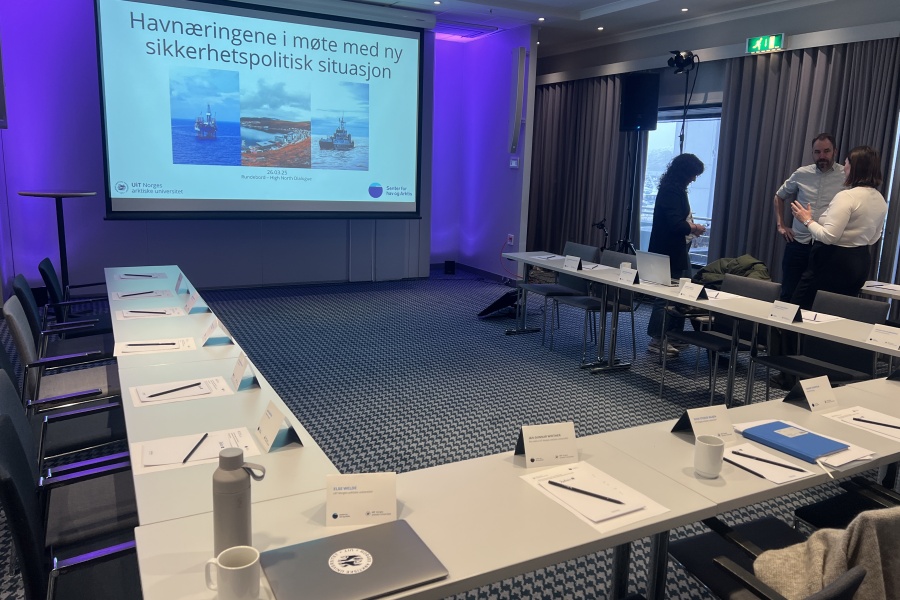

This meeting was part of the Centre for the Ocean and the Arctic’s roundtable working method, where we bring together different stakeholders to surface knowledge and experiences that can otherwise be difficult to obtain.
Roundtables create a safe space for sharing insights under the Chatham House Rules and provide nuanced input from different industries and perspectives, strengthening the foundation for our further work.