
What is a Roundtable?
The Center for the Ocean and the Arctic frequently uses roundtables as a working method.
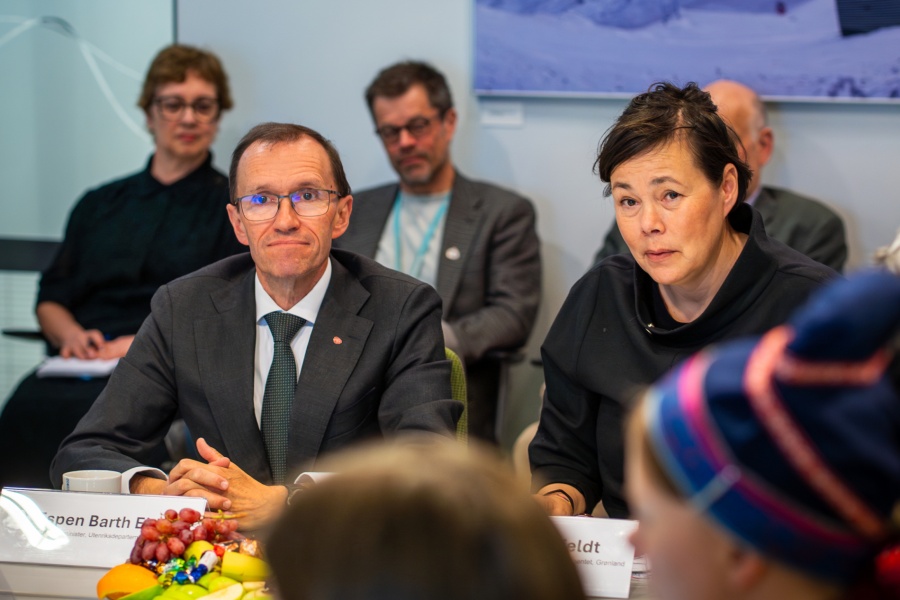
When the goal is to gain insights, exchange experiences, and foster honest reflections from relevant stakeholders, a roundtable is one of the most effective meeting formats. The setup gathers a limited number of participants physically around a table, striking a balance between breadth and depth in discussions – enough participants to ensure a variety of perspectives, but few enough to allow everyone to speak. Digital participation is not allowed.
A format that promotes genuine dialogue
A roundtable facilitates open conversations rather than one-way presentations. Participants can respond directly to each other's viewpoints, making discussions more dynamic and constructive. This lowers the threshold for contributing, improves the flow of conversation, and enhances engagement with the topics being discussed.
Trust and openness through the Chatham House Rules
Roundtables follow the Chatham House Rules, meaning participants are free to share the information discussed but not the identities of those who expressed it. This creates a safe space for sharing experiences and assessments that might not be shared in more formal settings.
When participants can speak openly without being quoted, the quality of the conversation improves. Trust and honesty lead to deeper insights and more nuanced responses.
A balance between diversity and depth
The roundtable format allows for diverse voices – from industry, research, governance, and civil society – while enabling in-depth discussions on specific issues. This makes the method particularly suitable for gaining qualitative insights, understanding complex topics, or testing new ideas.
Discussions around the table provide nuances that are often lost in surveys or open meetings. Conversations can be easily summarized and organized by topic, offering high informational value relative to the time spent.
Building relationships and shared understanding
A roundtable is not just a discussion arena but also a meeting place. Participants have the opportunity to get to know each other, share experiences, and build trust across sectors. This creates a strong foundation for collaboration and further knowledge development.
Why roundtables work
Roundtables provide a safe and engaging space for exchanging ideas and sharing knowledge. Through open conversations, trust, and respect, insights are generated that cannot be obtained through other methods.
At the Center for the Ocean and the Arctic, we use the roundtable format specifically to gather experiences and perspectives from various stakeholders – and transform them into knowledge that strengthens development in the northern regions and ocean industries.
Examples